


- Select City


Share:



Short-term rentals operate differently from traditional homes. Guests change every few days. Cleaning is frequent. Layout needs shift. Repairs must be quick. What works in a permanent residence doesn’t always work in a high-turnover Airbnb.
That’s where modular furniture makes a big difference.
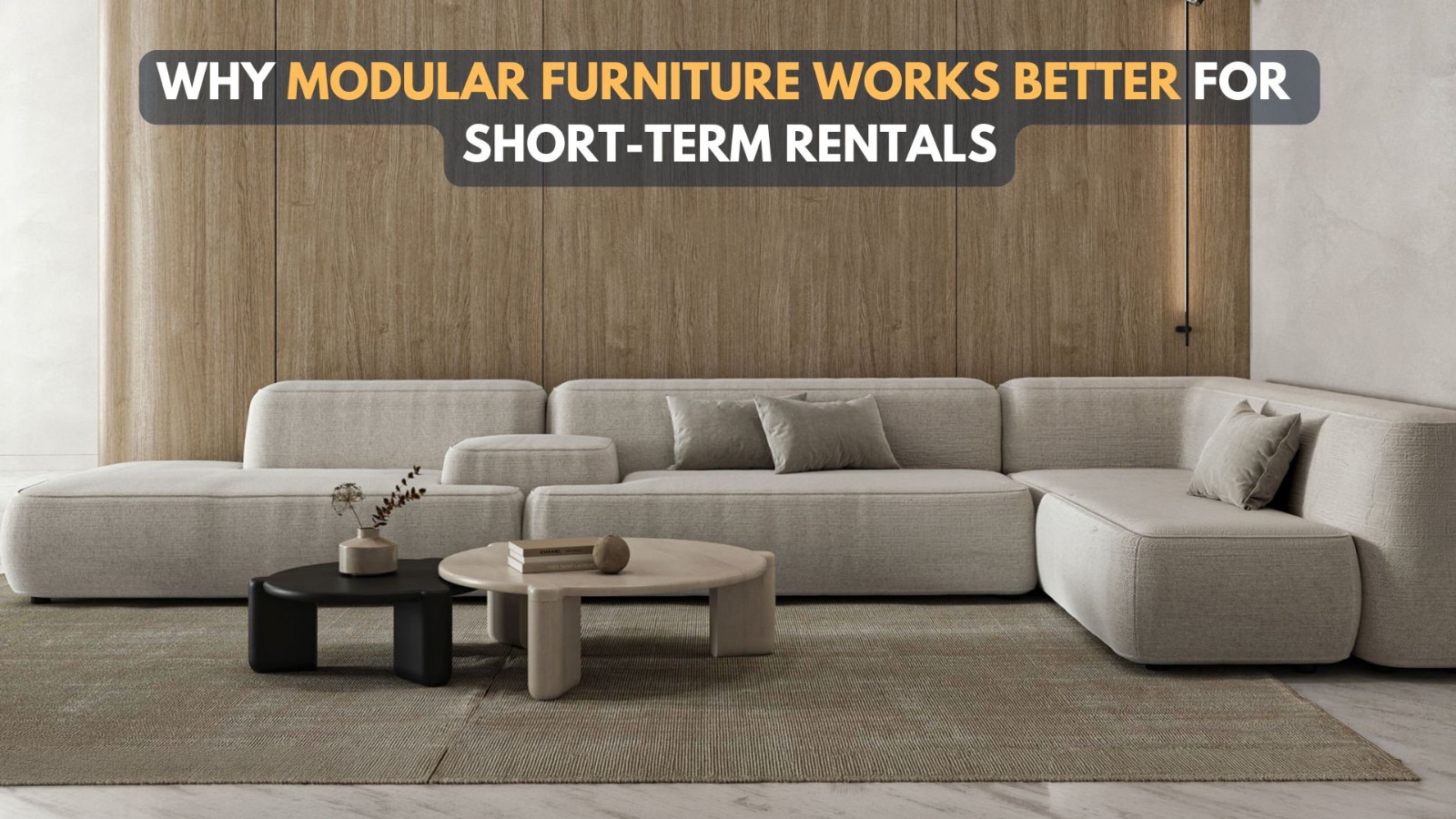
Modular furniture isn’t just about modern design. It’s about flexibility, durability, and operational efficiency all crucial for profitable short-term rentals.


1. Easier Replacement = Lower Downtime
In short-term rentals, damage is inevitable. A cracked table panel or broken sofa section shouldn’t force you to replace an entire piece.
With modular furniture:
Individual panels can be swapped
Cushion covers can be replaced
Sections of a sofa can be repaired separately
Damaged wardrobe doors can be changed without replacing the full unit
This reduces:
Replacement costs
Waiting time
Listing downtime
Less downtime means fewer lost booking days.
2. Better for High-Traffic Usage
Airbnbs experience far more wear than residential homes. Modular designs are often built with practicality in mind:
Reinforced joints
Replaceable components
Easy assembly and reassembly
Durable finishes
Because modular furniture is designed for assembly flexibility, it tends to handle disassembly and tightening better than many decorative pieces.
Regular tightening and maintenance are easier too.
3. Space Optimization for Smaller Units
Most short-term rentals operate in compact apartments.
Modular furniture helps:
Use vertical storage efficiently
Fit wardrobes into tight corners
Add shelving without bulky designs
Create workspaces within limited square footage
Since many modules are customizable in size, they adapt to your layout instead of forcing you to redesign around fixed dimensions.
For 1BHK or studio setups, this is especially valuable.
4. Easier Cleaning and Maintenance
High turnover requires fast cleaning.
Modular furniture usually:
Has cleaner lines
Fewer intricate carvings
Flat surfaces
Detachable parts
This makes:
Dusting easier
Stain removal quicker
Deep cleaning simpler
Sofas with removable cushion covers, for example, are far more practical than fixed upholstery.
Less cleaning time directly reduces operational costs.
5. Flexible Layout Adjustments
Guest preferences evolve. Maybe you later realize your target audience needs a workspace instead of a bulky dining setup.
With modular systems, you can:
Reconfigure shelves
Convert storage units
Adjust seating layouts
Add or remove sections
This flexibility helps you adapt without full redesign expenses.
If you expand into multiple units, modular layouts also allow standardized setups across properties.
6. Scalable Across Multiple Listings
Hosts who manage more than one Airbnb benefit from standardization.
Using modular furniture:
Creates consistent layouts
Simplifies maintenance
Makes replacement ordering easier
Speeds up setup for new properties
If a chair model works well in one listing, you can replicate it in others.
Consistency reduces operational complexity.
7. Better Long-Term ROI
While some modular pieces may cost slightly more upfront than basic flat-pack furniture, they often last longer.
Cost savings come from:
Fewer full replacements
Easier repairs
Lower maintenance time
Reduced breakage
Over 3–5 years, modular furniture often proves more economical than repeatedly replacing cheaper fixed units.
8. Modern, Clean Aesthetic
Short-term rental guests tend to prefer simple, contemporary interiors.
Modular furniture naturally supports:
Minimalist layouts
Straight lines
Neutral finishes
Clutter-free spaces
This design style:
Photographs better
Appeals to a wide audience
Ages more slowly than ornate furniture
Timeless designs protect your listing from looking outdated too quickly.
9. Ideal for Rental-Friendly Furnishing
If your Airbnb property itself is rented, you may need furniture that can be:
Assembled without structural changes
Disassembled when moving
Transported easily
Reinstalled in another layout
Modular furniture offers portability, making relocation smoother if you change properties.
10. Supports a Minimal, Efficient Setup
One major profitability rule in short-term rentals: avoid overfurnishing.
Modular furniture encourages:
Purpose-driven pieces
Storage built into walls
Fewer unnecessary items
Better open space
Less clutter means:
Faster turnovers
Lower cleaning costs
Fewer damage points
Efficiency improves margins.
Common Mistakes to Avoid
Even with modular furniture, be mindful of:
Extremely cheap particle board systems
Poor installation
Weak wall anchoring
Overloading shelves beyond weight limits
Quality and proper installation still matter.
Final Thoughts
Short-term rentals demand furniture that works as hard as the host does.
Modular furniture offers:
Flexibility
Durability
Faster repairs
Lower downtime
Better scalability
It’s not just a design trend. It’s an operational advantage.
In a business where occupancy and consistency drive profits, furniture that adapts and lasts will always outperform furniture chosen purely for appearance.
For Airbnb hosts focused on long-term ROI, modular furniture isn’t just convenient, it’s strategic.